Gallery

Darn Cute Holiday Cards

When I saw this adorable card created at The Papercraft Clubhouse in Westbrook Connecticut, I just had to buy the supplies to make this!  Also, I can’t say enough about this store.  The owner Tracie is wonderful, and she and her staff are so knowledgable and helpful.  If you haven’t been there you should head on over.  They also offer classes in mixed media( my favorite) and have many talented artists who teach.  Who knows, maybe you’ll see me in class!  Check them out!

Feeling Tapped?


Where to find your inspiration when your muse refuses to show.


Distract yourself. Read a book, take a walk, talk to friends. Anything that takes you outside your normal realm is eligible for this, because the lack of inspiration often comes from too much of the same. We feel we’ve overdone it, we feel we have nothing new to say, and so our minds just turn the same thoughts over and over in our heads. When this happens, what we need more than anything is to walk away, to take in new experiences and refresh ourselves with the reality of the world. Art speaks to our experiences, and if we run out of creativity it may be be because our experiences have become too consistent.

Take care of yourself. Have you been looking after your own needs? Are you fed, rested, comfortable? Sometimes a lack of creativity comes from just feeling burned out, and when that happens it’s always worthwhile to take a step back and ask yourself how you are doing, especially if nobody else in your life has asked you lately. It’s easy to lose track of ourselves, especially when we have been bookending our responsibilities with our artwork and leaving no time for basic necessities like sleeping and eating.

Try something new. If you’ve been up to your eyes in watercolors for the past six months, maybe pick up a skein of yarn and try some textile work. If you’ve been needle-felting since Christmas, maybe get out your soldering iron. Whatever you’ve been doing, mix it up! Switch up your medium, play with textures, and don’t be afraid to fail. Failure is essential in art, and inevitable in the middle-stages of anything. Everything fails, before it becomes something wonderful, so embrace it as part of the journey.

On Legitimacy

What does it mean to be ‘legitimate’? Whenever I tell people that I am an artist, the first thing they often say is ‘have you sold anything?’ I have, but does that matter? Is our validity really so rooted in whether or not the music of our souls is commercially viable? It seems a strange metric, but it’s one I hear time and time again.

It’s issued as a challenge, almost, an attempt to sort out the true, real artists from the, I don’t know, fake ones? Is there such a thing as a fake artist? I’m honestly not sure how it’s possible to be one. Art is intensely, deeply personal, it’s the way that we connect to the pieces of ourselves we’ve lost track of, and the way we speak when we have no words. It seems very strange, then, to consider that anyone, in putting brush to canvas, could be doing so unfairly. There is no legitimacy to be had, only validation, and those are two very different things. Is it about galleries, or is it about finding your truth? It seems odd to me that when faced with the possibility that an artist is compensated for her work, the reaction of many is to define the artist on how profitable she is. If one is never paid a dime for something they have labored over, does that mean they labored for nothing? Should they not have? Should they pack up their brushes and go home, if they are not recognized within their time? Does it matter that many famous artists who are now worth a fortune never saw a penny in their lifetimes? What does it mean, really, to be legitimate? How do you know when you’ve found it?

I believe that the only way to truly move forward, to create, to live your life, even, is to let go of the idea of legitimacy entirely. Give up, on trying to discern whether you’ve ‘made it’, whether you deserve to call yourself an artist. It’s a great way to sew self-doubt, but a terrible way to improve, and left unexamined it can stifle your natural talent as well as sap your energy to try. This sort of fear, the fear of not being legitimate, rolls itself into a big ball of ‘you’re not good enough’.  What use is that? The only true way to improve and move forward in your life and your art is to toss the concern aside, though it’s certainly not easy to do. Creating requires silencing the critic lurking in the back of your mind long enough to try something new, and that’s never easy. If you really put your mind to it, though, it’s certainly worth the result.
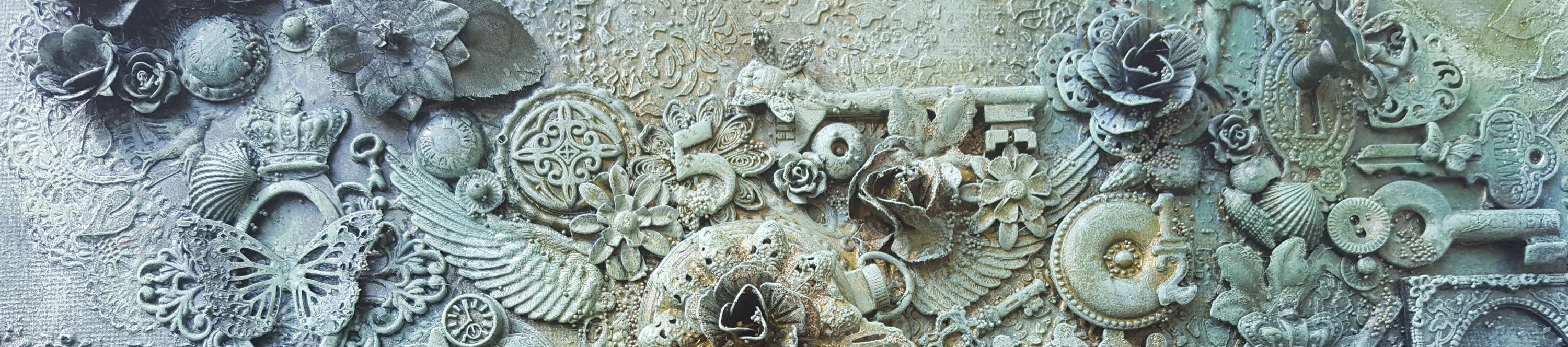
Back On the Beach

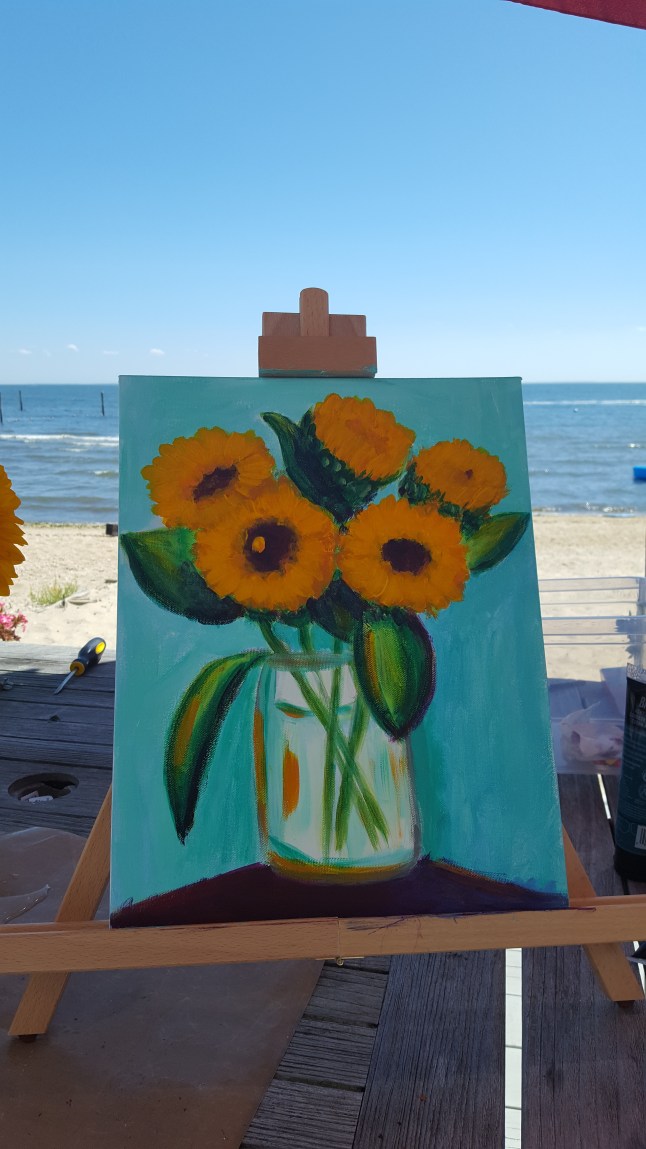
I’m fortunate enough to live near the water, something I take full advantage of during the hot summer months. There’s nothing quite as wonderfully serene as feeling the warm beach breeze tousling my hair as I sketch a pair of seagulls, block in the edges of a portrait, or paint the sea in strokes of acrylic. As merry as the holidays so often are, I find myself longing during winter for the pleasant summer heat that will beckon me back to the beach, away from fickle sleet and cracked ice that coats the roads. I often find the wind off the ocean to be all the inspiration I need on hot summer days, and as the seasons change my frolicking deer and whimsical snowmen give way to other motifs. I have noticed that my summer works project a sense of serenity, a sort of calm that my snowscapes seldom do. It should be no surprise that our artwork reflects how we feel; no matter how much I tweak a painting of an angel, she will always have wings of fire if I’m in a low mood. My paintings weep when I weep, they rejoice when I rejoice, it should be obvious to me but I find myself caught off guard each and every time they get away from me. Art is an extension of ourselves, and no matter how we try to control it it has a way of saying exactly what it means, revealing a great deal about ourselves in the process.

2016-08-14 14.10.26

Art and Illness

Art can soothe the soul, but sometimes it taxes an already stressed body. Here’s how I keep my art/health balance intact:

1. Medicine

Obviously, the most important thing is to consult with your doctor and make sure that your treatment regimen is right for you and working the best way it can. Only you and your physician can determine what is and isn’t working, so it’s always good to check in with them when something is not longer sufficient.

 2. Meditation

A healthy mind is as important as a healthy body, and stress can negatively impact your physical health just as readily as an injury will. When the stresses of life leave me feeling drained and overwhelmed and unsure how to continue, I refocus, recenter, and breathe.

3. Heat (Or Cold!)

Depending on the type of ailment, sometimes a heating pad or an ice pack can be just the ticket. In the right conjunction, these items can dismiss persistent headaches, soothe aching joints, or relieve us of any number of distracting pains that keep us from our artwork. Dressing for the weather doesn’t hurt either, but is of course not the same.

4. Rest

This is the easiest to prescribe but the hardest to follow through on. As much as we value determination, there are many occasions when pushing through simply isn’t the right call. There will be times when you just need to take the day off from your art, because your body isn’t up to the task. That’s okay, and it’s important not to be too hard on yourself when that happens. It can be hard to let go of the idea that we’re going to finally finish that big knitting project, but if arthritis is making your hands hurt and your medication is no relief, then setting it aside and snuggling under the blankets is a perfectly acceptable, and even recommended, course of action.

Gallery

Crafting from the Heart

Last month, I was invited to create a variety of themed works of art to be displayed together in a public location. The theme wasn’t really one that I enjoyed, and the deadline was tight. I worked diligently, and managed to produce six or seven pieces that everyone seemed to like. When I looked at them, though, I wasn’t satisfied.

This is not the first time this has happened to me. The previous summer, I had been hard at work on a series of paintings which explored themes of architecture, and I was quite excited about the project. Somewhere along the way, though, my painting came together without me. This might seem hard to imagine, as I had created it, labored over it, brought it into the light for all to see. The truth was, though, that when I looked at this painting, I couldn’t recognize it as my own. Here, too, I had struggled, before ultimately taking the paintings down off the Wall of Completion and putting them back up on the Easel of Progress.

I had created many things, beautiful things, people told me. You’re being too picky, people said. But when I looked at these paintings and these pieces of art, something was missing. It took me several weeks to realize the piece missing was me. Yes, I had made them. Yes, they were technically proficient, but they lacked all essence of me. I had made them out of obligation, not with love, and it showed. To others, they were a fine aesthetic, but they were not my work. Not really. I set about stripping each of the paintings down, adding new base layers, slathering gesso, smearing white and orange and teal with reckless abandon. In the end, each of my paintings were not symmetrical, they were not neat with even edges, but they were mine.

Mixed Media Stigma

It has been so long since I felt this insecurity, I have almost (though not quite) begun to forget what it feels like. From people I’ve spoken to, though, I gather it’s very common, not limited to my own experiences, and I still recall how much it tormented me at the beginning of my artistic journey. I haven’t seen much on it in my voyage over the internet’s choppy waves, so I thought it merited address. You wouldn’t think there would be a stigma about different types of art, but time and time again I’ve stumbled into it. Whether it was my partner implying collage was not ‘real’ art, like drawing, or someone questioning whether I am a ‘real’ artist when they see me collecting found objects, it was a common theme in my early travels. One moment in particular stands out to me, when I think back on this.

I was sitting at the table, paint on my hands and a smile on my face, working on a new piece. It wasn’t one I planned to even show anyone, it was personal to me, and I was so preoccupied with it I didn’t initially notice the person walking up behind me. He was a guest, of my partner, but my partner was nowhere to be found. I don’t know this man well, but I had met him a few times. He noticed I was painting, and he asked what I was doing. I told him I was working on my art, and he took another step closer. That was when he caught sight of my messy heap of stencils, off to one side. They were flat, and well cared for, but tinged with colors that had never quite come clean. Oh, he said then, you’re cheating.

It’s hard to describe how that felt, but if you are an artist who works with mixed media and you’ve ever shown your work to a judgemental acquaintance I’m sure you don’t need to imagine it. It took a long time for me to reconcile this idea, to come to terms with the judgement that apparently faces artists who use seashells on their canvases, who edge portraits in lace, who collage photos of their ancestors into their work. Part of what helped me realize how unproductive this type of self doubt was, was finally noticing the double standard I was using whether comparing others’ art to my own. When my daughter told me that she was self conscious about her newfound interest in collage, because it wasn’t ‘real’ art, I was emphatic that the way she chose to express her feelings was not up for audit. I maintained that it didn’t matter whether she made her art from paper or paint or lyrical verse, what mattered was that it meant something to her, that it said something. If I could believe these things for my daughter, why couldn’t I believe them about myself? It was a question that lingered.